The version
Jamaican labels started pressing the same song without the singer onto the B side of the single. It was pure practicality: the selector played it so the deejay could talk over the top. Those B sides were the raw material.
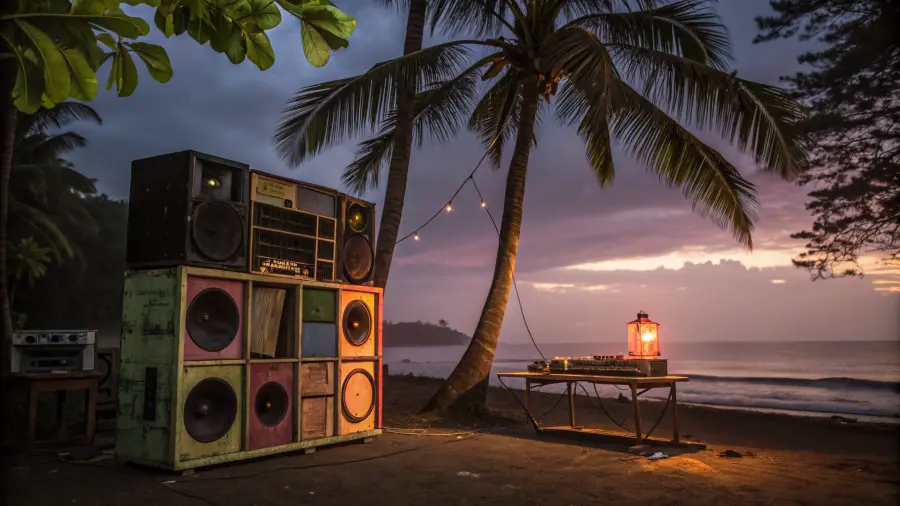
In a Kingston studio in the late sixties, an engineer pulled the voice out of a reggae song that was already finished. He left the drums and the bass running, fed that mix into a tape echo and let it go until the whole room sounded hollow. What came out the other side did not have a name yet.
Sixty years later that same move holds up the night we are building among the trees near Jacó. Almost nobody on the floor says it out loud, but dub is the grandfather of all of this.
It was not invented for listening at home. It started as a working tool: vocal-free versions so the sound system selector had something to talk over and the crowd had something to keep dancing to. The mixing desk stopped being a machine and became an instrument, played live while the tape rolled.
Jamaican labels started pressing the same song without the singer onto the B side of the single. It was pure practicality: the selector played it so the deejay could talk over the top. Those B sides were the raw material.
Engineers and producers stopped copying the version and started rebuilding it: kill the drums for eight bars, bring them back drenched in echo, pull the guitar until only air is left. King Tubby and Lee "Scratch" Perry are the names tied to the moment this went from a stunt to a trade.
None of this happened in concert halls. It happened in yards and on corners, with rigs built by hand, wooden cabinets and a selector deciding the order. People were not going to see a band. They were going to stand in front of a system.
Caribbean migration carried the habit to London and Bristol, where the sound system met whatever the new island was playing. The Jamaican echo ended up inside jungle, which ran at triple the speed and still sounded like the same thing underneath.
When a sound turned up in south London at 140 with huge gaps and sub underneath, the label got assembled out of two borrowed pieces: the "dub" from Jamaica and the "step" from 2-step garage. Split the name in two and you get the whole family tree.
Dubstep is defined by 140 and dnb by 170. Dub is not defined by a number: it is what an engineer does to a song that already existed. That is why there is dub of reggae, of ska and, much later, of nearly anything.
Tape delay, spring reverb, filters opened by hand and silence where a guitar used to be. Taking things away is the main technique. A good dub is measured by how many tracks it dared to switch off.
The decade the version turned into a form with rules of its own. It was done live over the mix with no undo: whatever happened on that pass is what ended up on the record.
This country has a coast where reggae is not imported music. In Limón, on the Caribbean side, calypso and reggae have been playing in the street and inside houses for generations, inside an Afro-Caribbean culture that asked nobody for permission. We are not going to name places or people: it is not our scene, and telling it badly would be worse than not telling it.
What we can say is that the distance between that coast and what we are putting together on the Pacific side is shorter than it looks. Both came out of the same idea: a big rig, outdoors, bass carrying the weight and somebody deciding the order of the records. The tempo, the language and the year all change. How you stand in front of the speaker did not.
The gap, before anything else. In 1972 an engineer cut the voice and the guitar to leave the bass and drums alone in the room; in 2005 a Croydon producer left eight beats nearly empty before the drop. Same move, thirty years and different machines in between.
It also owes the long echo, the one that makes a hit repeat until it disappears, still the cheapest way to enlarge a small room. And it owes the idea that this music gets heard standing in front of a specific rig, not on headphones. That is why we keep insisting on doing it outdoors.
No. Dub is reggae remixed in Jamaica from the sixties on, usually slow. Dubstep is English electronic music from the 2000s at 140 beats. They share half a word and one idea: take things out so the bass has room.
Not a rented PA. It is a crew with its own rig, usually hand-built, a selector who decides what plays and a name people know. You went to see the system the way you go to see an artist now.
We are not promising it. What is locked is the frame: dubstep and experimental bass. Inside that, if a DJ opens with something slow and drenched in echo, that call is theirs, made with a set in hand.
Not at all. This page is context, not homework. You can show up at the festival without having heard a single record from the seventies and the night works the same. But if you ever wondered where the echo came from, now you know.
The line runs all the way to the present and the steps have their own pages: uk garage and jungle are the two in the middle, and over on the other branch sits halftime. Where all of it lands is in what is dubstep, and the night itself is in the bass festival near Jacó. Tickets are on sale now. Choose your night and buy tickets for La Selva del Bajo at The Park at Ocean Ranch.
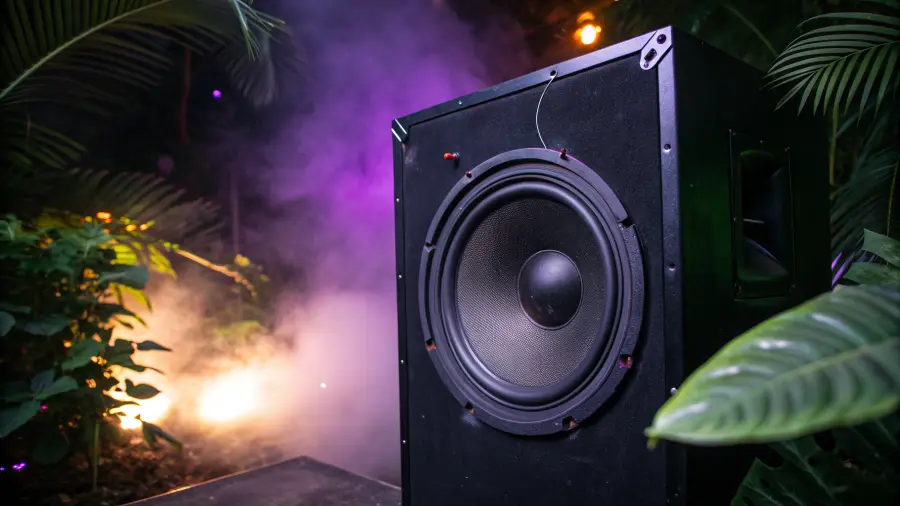 What Is Dubstep? Origin, BPM and SoundDubstep is electronic music at about 140 BPM with half-time drums and sub-bass. Where it came from, how it differs from drum and bass, and what to listen for.
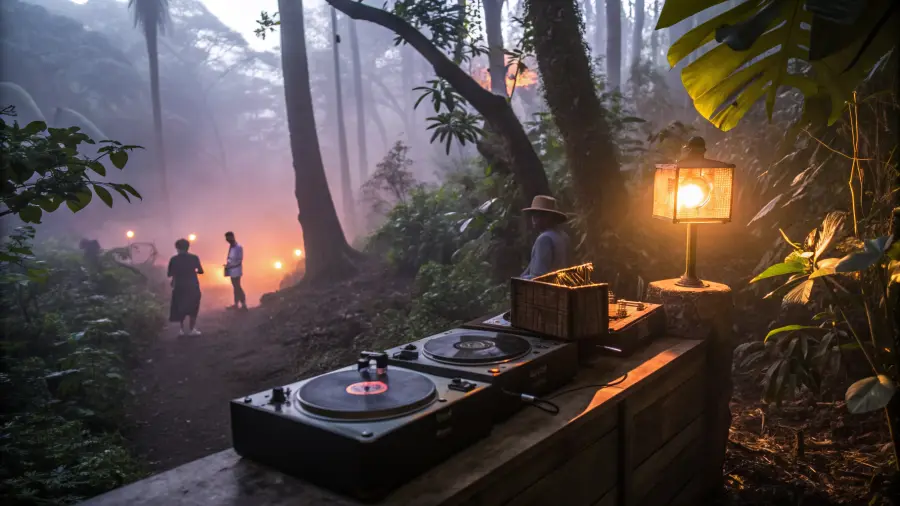 UK garage in Costa RicaWhere dubstep got its skeleton. UK garage in Costa Rica: swing, skipping hats, chopped vocals and sub, told from the grounds near Jacó.
 Jungle in Costa RicaJungle in Costa Rica: chopped breaks at 160, the amen break and Jamaican sound systems, told from the open-air grounds near Jacó.