NEUROFUNK
IN COSTA RICA.
Neurofunk is the branch of drum and bass that sounds like machinery: basslines like metal bending, drums trimmed to the millimetre, and not one note sitting there by accident. It is also the genre most people describe as too much, and it earned that reputation honestly.
What happened in the late nineties
By then drum and bass had already opened in several directions, and one of them headed somewhere dark and mechanical. Out went the funk sample and out went the ragga vocal. What was left was an almost empty track with two things in it: drums programmed hit by hit, and a bassline that twists and changes texture without changing note. The pair Ed Rush & Optical are the names that come up most when anyone looks for where that sound got locked in.
The central tool has its own name: the reese. It is called that after the alias Kevin Saunderson used on the Detroit record everyone lifted it from. Neurofunk producers ran it through distortion, filters and modulation until it stopped sounding like an instrument and turned into a machine failing in slow motion.
The other thing that defines the genre is precision. Every snare gets its own sound and the mix is built so bass and drums never step on each other. That is why producers love it: a full week on eight bars, and you hear the difference.
And that is also why it splits the floor. Some people hear it and feel there is never any rest, that the tension parks in one place and dancing to it for an hour is exhausting. Other people find that exactly the point. Both positions are reasonable and we do not care to referee.
Signs of neurofunk
- A bassline that changes texture inside a single note, as though somebody is wringing the filter while it rings.
- Dry drums, almost no reverb, trimmed so they never sit on top of the low end.
- Barely any melody. If there are chords, there are two of them and they are at the back.
- Tempo between 172 and 176, steady from start to finish.
- Odd gaps: they are short and they arrive when you were not expecting them.
Three ways to use 174 beats
The first three rows are common knowledge. The last row is ours, and it shows up because the question keeps coming.
| Neurofunk | Liquid | Jungle | |
|---|---|---|---|
| Bass | Designed note by note, with distortion inside it. | Round and clean, almost always with a melody. | One long still sub, borrowed from reggae. |
| Drums | Programmed and dry, edited hit by hit. | Loose, with swing and air between hits. | Sampled breaks, changing every bar. |
| Mood | Constant tension, never fully released. | Bright and sung, built to let you breathe. | Declared party, sirens and voices on top. |
| Where it lands best, in our view | Once the floor is hot and needs no convincing. | At dusk, while tents are still going up. | Small hours, when people want to shout something. |
Neurofunk in Costa Rica
We know of no neurofunk parties in the country. We also have no way to measure it: it is a genre that moves through people producing in a bedroom more than through nights in a venue, and that leaves no public trace.
What we can vouch for: the sound arrives. Artists from this branch show up in the poll, written in by people here, and the most common route today for learning bass design runs through neurofunk tutorials. Anyone producing bass here already has it close, even without using the word.
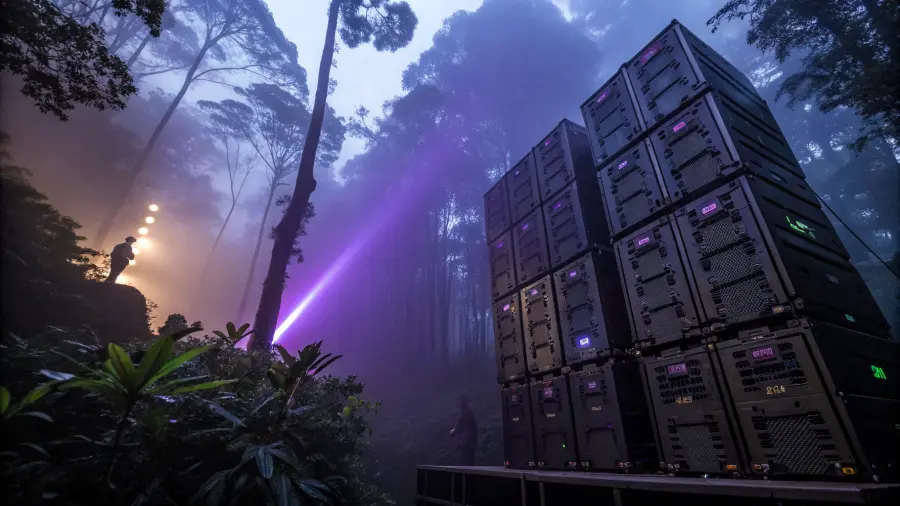
There is a practical thing. Neurofunk asks for an honest rig. If the system comes up short, all that millimetre editing turns into a smear and the track loses exactly what made it good. Outdoors, with room for the low end to leave and not come back, it gains more than anyone expects.
Why this is on a dubstep site
Shared craft, mostly. A neurofunk bass and a heavy dubstep bass get built with the same tools and the same patience, and there are producers who move between the two without telling anyone. The most direct bridge is halftime, which runs at the dnb tempo with the drums counted in half and lands near the dubstep pulse.
That is as far as we can go. The bill is dubstep and experimental bass; how much room another genre gets is decided by the DJs. If a set crosses over this way, it will be because it fit somebody's moment, not because we announced it.
Neurofunk is less danced than withstood.
Questions that arrive on WhatsApp
Is neurofunk drum and bass or something else?
It is drum and bass. Same tempo, same bar structure, same DJs mixing it with everything else. What changes is what it is made of inside: instead of sampling a break and putting a bass under it, every sound here gets designed from scratch. A set can move from one to the other without the floor noticing the jump.
What is a reese?
Two saw waves tuned just barely apart, sounding together. That small mismatch makes a beating your ear reads as thick and moving rather than a clean note. Almost everything that sounds like twisted metal in this genre started life as that.
People say it is impossible to dance to. Is that true?
It is harder. The genre holds tension without letting go, so it never hands you the relief other branches do. People who dance it well tend to go still from the waist down and move everything else. An hour straight is tiring, honestly, and that is part of the joke too.
Will neurofunk play that night?
We are not promising it, and nothing gets announced until it is signed. What is decided is the frame: dubstep and experimental bass across Pool and Main stages from 12 pm until 3 am. If you mix or produce this, the performer call is open and carries no genre filter.
Of the genres we cover, this is the one that survives worst on phone headphones. Next door you have experimental bass, jungle, and the fast-tempo argument at drum and bass in Costa Rica. Tickets are on sale now. Choose your night and buy tickets for La Selva del Bajo at The Park at Ocean Ranch.
 Drum and bass in Costa RicaThirty percent of our poll asks for drum and bass while the lineup is dubstep. How the two genres meet at the bass night near Jacó, Costa Rica.
 Experimental bass in Costa RicaOne in six signups asks for music with no box. What experimental bass is, where it came from, and why it is on the dubstep bill near Jacó, Costa Rica.
 Halftime in Costa RicaHalftime in Costa Rica: 170 on the clock, 85 in your body. The hinge between drum and bass and dubstep, and where it lands near Jacó.