Glitch hop in Costa Rica.
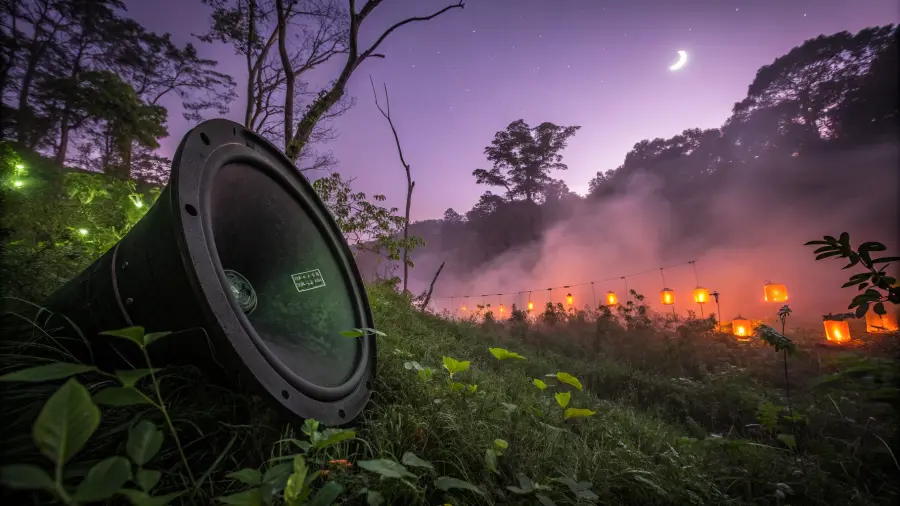
Something odd happens with glitch hop: nearly everyone has heard it and nearly nobody knows what shelf to put it on. Too slow for the bass floor, too filthy for hip hop, and way too catchy for anyone who insists that weird music has to be uncomfortable.
The only bass that makes you smile
It turned up in the mid 2000s, when producers coming out of glitch and IDM started putting hip hop groove under their experiments. The result ran between 100 and 110 beats per minute, the tempo of a rap beat, with the editing smashed to pieces: millisecond cuts, samples repeated until they sound like broken hardware, bit depth crushed on purpose.
What saved it from staying a lab exercise was the funk. Under the edits there is almost always a bass line with swing, the kind that moves hips before heads, and up top, sounds wearing the face of an old synth. That makes it the one close relative of dubstep where people laugh on the floor instead of pulling a disgusted face.
It grew mostly on the US west coast. The California bass scene adopted it as the comfortable tempo on a lineup, the one that goes on when the floor has been flat out for two hours and needs something else, and from there it jumped to the big festivals.
A warning before you go digging: the name gets used for two different things. There is the IDM-leaning side, made for headphones and for standing still, and there is the festival side at 110 with thick bass. They share a name and they do not always get along.
How to spot it
- A hundred or a hundred and ten beats per minute. If you can nod your head to it like rap, you are in the right place.
- A stutter. One word or one hit repeated three or four times, shorter each time.
- Swing. The groove does not land on the perfect grid, it drags a hair behind on purpose.
- Bass with the character of a seventies synth rather than a clean pure sub.
- Something sounds broken, and it is meant to. The error is part of the arrangement.
For the far end of the same tree, there is riddim.
Three tempos, side by side
The first four rows are not ours; anyone who mixes already knows them. The last one is our opinion, and it sits here because people ask, not because the running order is settled.
| Glitch hop | Dubstep | Trap | |
|---|---|---|---|
| Tempo | 100 to 110, the walk of a rap beat | 140 with half-time drums | 140 to 150 counted in half time, so they feel like 70 |
| Groove | Swung, dragging on purpose | Square; the gap is what runs it | Hi-hats chopped into triplets over everything |
| Bass | Synthetic and characterful, more mid than deep | Sub you feel before you hear it | A long 808 doing bass and kick at once |
| Mood | Playful; the one that makes people grin | Serious and physical | Swaggering, built for shouting the words |
| When it lands best, our opinion | Sundown and the last hours of morning | Deep night, once nobody is pitching tents | The stretches where the floor wants to sing |
Glitch hop in Costa Rica
It has no parties of its own here and almost never gets printed on a flyer. It arrives smuggled in: somebody drops two tracks at 110 during the warm-up, people enjoy them, and nobody asks what the thing is called. Our poll has no box for it either; it falls inside the 17 percent weird bass slice, along with everything else that fits nowhere.
If you make glitch hop in Costa Rica and it feels like there is nowhere to play it, you are not wrong. The genre is an orphan almost everywhere, and that is exactly why it interests us. Same goes for trap and for most of what lives downstream of dub: whatever fits no box ends up playing the slot nobody wanted.
Out on the floor
One paragraph and done. Music starts at 12 pm on the Pool Stage, and at that hour a swung track at 110 does more for the mood than the heaviest drop on the bill. Later it also works as a bridge between the Pool and Main Stage blocks. That is our opinion: the lineup is dubstep and experimental bass, and who plays what and when is settled by the DJs.
What people ask us about glitch hop
Is it just slow dubstep?
No, and they come off different branches. Dubstep comes out of London garage; glitch hop comes out of glitch music crossing with hip hop, on another continent with other tools. They meet at one point only: both treat bass as the lead instrument.
Why does everything sound chopped up?
Because the digital error is the material. The stutter, the sample that jams, the sound with its resolution forced down: all of that used to be gear failing, and somebody decided to use it as decoration. That is where half the name comes from.
Will glitch hop play at the New Year's edition?
No promises, and we do not publish names early. The frame was decided at the start: bass and dubstep. Where a style fits inside that frame is the DJs' business, with a finished set and a floor in front of them.
I mix at 110. Should I send something?
Yes. The artist call takes any genre, and it accepts mixes, tracks, portfolios and video. If you would rather ask before sending anything, the WhatsApp number is +1 518 351 6952. On Instagram we are @laselvadelbajo.
If you like the stuff with no box
This page has a next-door neighbor, and it is where almost everything unclassifiable ends up. Tickets are on sale now. Choose your night and buy tickets for La Selva del Bajo at The Park at Ocean Ranch.
Experimental bass Experimental bass in Costa RicaOne in six signups asks for music with no box. What experimental bass is, where it came from, and why it is on the dubstep bill near Jacó, Costa Rica.
 Trap in Costa RicaThe word trap covers two different genres. Which is which, what they share with dubstep, and what that means near Jacó, Costa Rica.
 What Is Dubstep? Origin, BPM and SoundDubstep is electronic music at about 140 BPM with half-time drums and sub-bass. Where it came from, how it differs from drum and bass, and what to listen for.