JUNGLE
IN COSTA RICA.
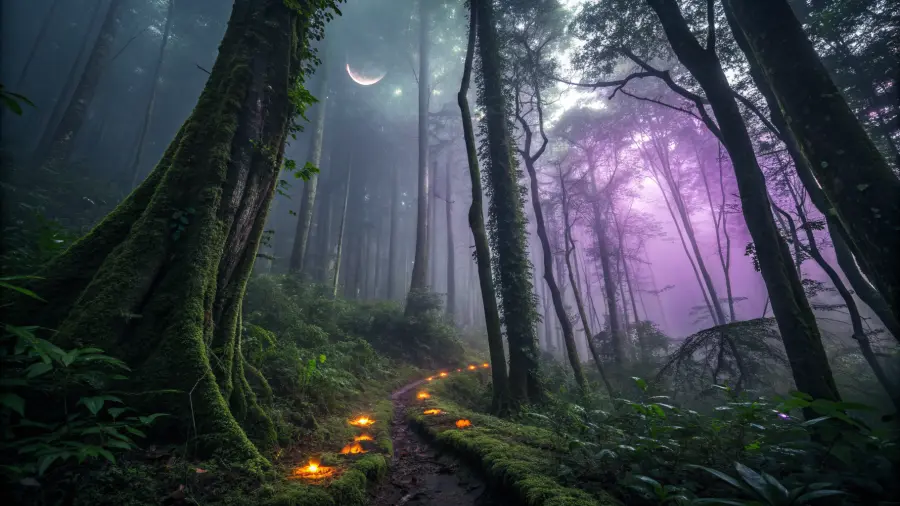
On this site the word jungle means two things and both are true: the name over the door, since selva is Spanish for it, and a British genre from the early nineties built out of breaks chopped up at 160 beats per minute. We have made that joke, so from here down we are talking about the genre.
United Kingdom
Born in English raves at the start of the decade, when people began speeding up old funk records until the drums came out unrecognisable.
Beats per minute
Roughly that range, sometimes 170. Fast on top and slow underneath: the drums run at double the bassline, and one track gets danced at two speeds.
Cut into pieces
A single bar of drums recorded in the sixties, sliced hit by hit and reordered, holds up an absurd number of tracks in the genre.
Where it comes from
The starting point is British raves at the end of the eighties, when hardcore ran at a speed that now sounds like a cartoon: pianos, sped-up vocals and drums sampled off sixties funk records. Nobody played those rhythms, they stole them. A cheap sampler and one borrowed bar were enough to build a whole night.
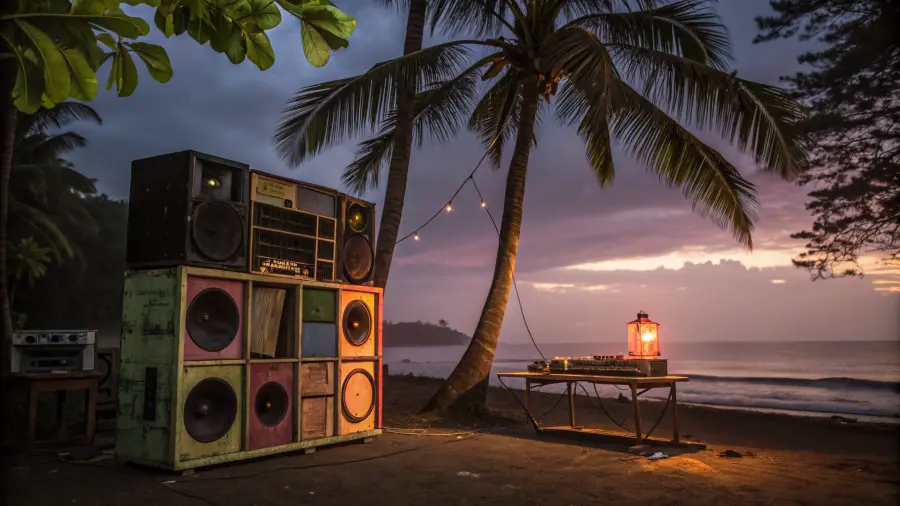
The other half comes from Jamaica, or more precisely from the London neighbourhoods where the children and grandchildren of Caribbean families grew up. That is where the shape of the party came from: the sound system built by the same people who dance in front of it, the acetate cut that same week so nobody else has it, the MC talking over the track, and above all a bassline treated as the lead instrument. Put that together with sped-up breaks and you have jungle.
One detail in the middle is worth naming properly. The most used break comes from "Amen, Brother", a Winstons B side from 1969, six seconds of drum solo that somebody put on a sample record in the eighties. Jungle producers picked it up and instead of looping it they cut it into pieces and rebuilt it backwards, forwards and at half speed. Thousands of different songs came out of that one bar.
By the middle of the nineties the sound got cleaner and more studio-bound. The drums settled into two-step patterns, the bass got designed instead of sampled, and the label changed to drum and bass. The word jungle stayed stuck to the rawer thing, and years later it came back on its own with new producers.
How to tell jungle from drum and bass
-
Listen to the drums first
If the pattern changes every bar, if there are rolls, if counting to four is hard work, it is jungle. Drum and bass tidies all of that into two hits that repeat with barely any movement, which is why it dances flatter.
-
Then go find the bass
Jungle uses a sub lifted from reggae: one round long note sitting still underneath the chaos above it. Modern dnb treats bass as a sound to sculpt, with distortion and pitch shifts inside every note.
-
Check the energy
Jungle sounds like a party: ragga vocals, sirens, people shouting for the rewind. Dnb is usually built around one moment, with a long run-up that sets the drop. One drops you on the floor, the other walks you there.
Jungle in Costa Rica
There is no jungle scene here that we have managed to find. We have not found dedicated parties or DJs who live off it, and at the few bass nights the country has, the genre turns up one loose track at a time, when it turns up at all.
The odd part is that the Jamaican half of this story is already familiar here. Costa Rica has a Caribbean coast, it has Limón, and it has had a reggae and sound system tradition for decades. The cultural machinery behind jungle, a big rig put up by people from the neighbourhood and a bassline in charge, needs no explaining in this country. What is missing is somebody laying the breaks on top.
If you mix jungle and you are reading this from here, write to us. The performer call never had a genre box on it and we are not adding one. Tickets are on sale now. Choose your night and buy tickets for La Selva del Bajo at The Park at Ocean Ranch.
Questions about the genre
Are jungle and drum and bass the same thing?
Depends who you ask, and that is the honest answer. Plenty of people treat jungle as the old name for the same music. People who lived through it treat them as two things that share a tempo: one made of stolen breaks, the other of programmed drums. We use jungle for the chopped sound and drum and bass for the rest.
What exactly is the amen break?
Six seconds of drum solo recorded by the Winstons in 1969 for the B side of a single. A sample record put it into circulation twenty years later and it ended up underneath entire genres. The drummer never got paid a cent, which is worth knowing before anyone romanticises the history of sampling.
Where does the name come from?
Nobody agrees and the versions in circulation contradict each other. Some trace it to an area of Kingston, some to a phrase shouted on a track, some say it was what people called the party before the music. We would rather leave it at not knowing it.
Will jungle play that night?
We cannot promise it. Dubstep and experimental bass is the bill, and how another genre fits in there is up to the DJs. What we do know: 30% of the poll asks for drum and bass, and that conversation happens separately over at drum and bass in Costa Rica.
And at the festival itself
Pool and Main stages, wooded camping, art, restrooms and check-in at The Park at Ocean Ranch. Doors open at 12 pm and official music runs from 12 pm until 3 the next morning, capped at 500 people, with your tent beside the floor. Bass walks between the trunks without asking, which is where the two meanings genuinely touch. The neighbours next door are UK garage, dub and neurofunk.
Drum and bass in Costa Rica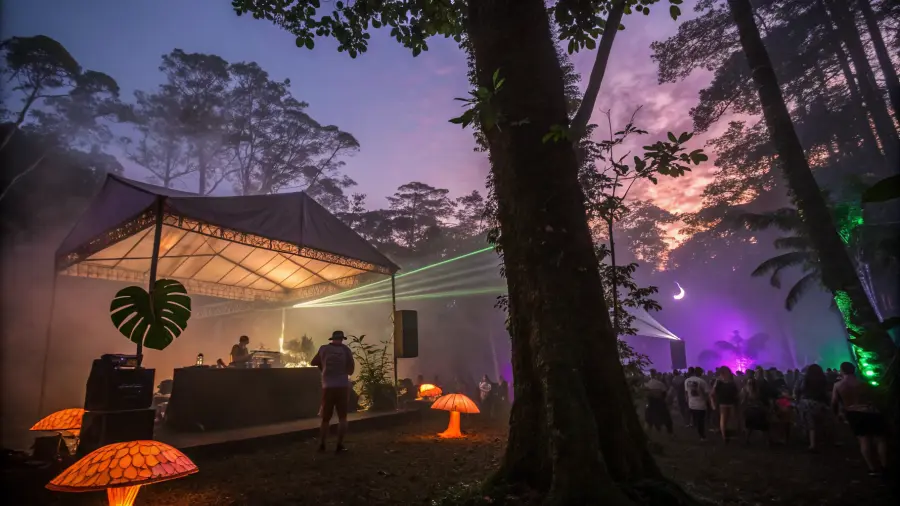 Drum and bass in Costa RicaThirty percent of our poll asks for drum and bass while the lineup is dubstep. How the two genres meet at the bass night near Jacó, Costa Rica.
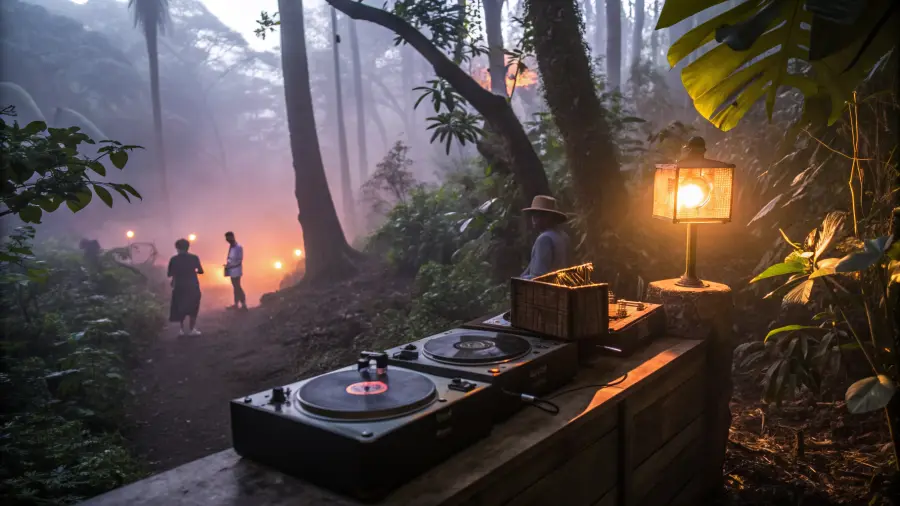 UK garage in Costa RicaWhere dubstep got its skeleton. UK garage in Costa Rica: swing, skipping hats, chopped vocals and sub, told from the grounds near Jacó.
 Dub music in Costa RicaDub in Costa Rica: from Kingston studios to the sub near Jacó. The grandfather of dubstep, sound system culture and the Caribbean coast.