Halftime in Costa Rica.
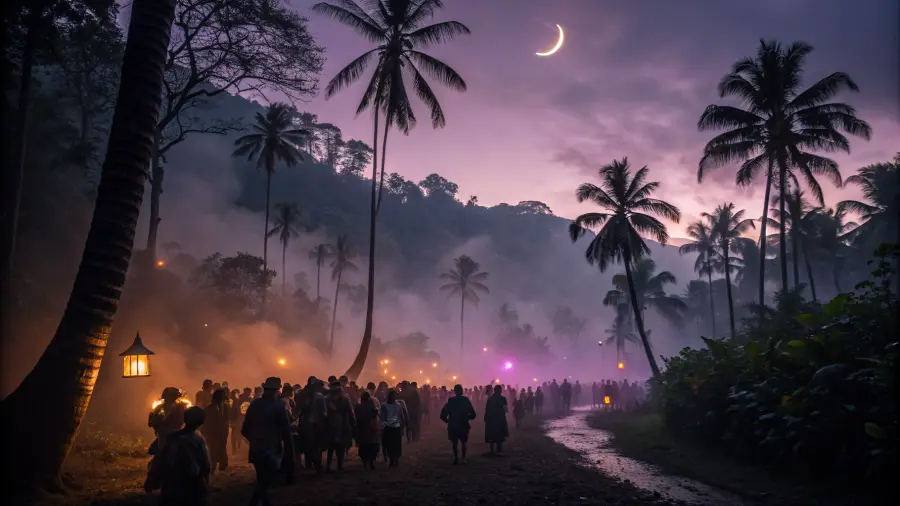
Halftime is a counting trick: the track runs at 170 beats per minute like any drum and bass tune, but the drums hit half as often, so your body reads it at 85 and ducks like it is dubstep.
That is the whole genre. There is no more.
The good part is what that one decision sets off. With the main hit at half speed there is twice as much room inside the bar, and something has to go in there. Usually bass: long notes, filters moving slowly, layers changing shape while they sound. Hence the feeling that a halftime tune hits harder than a dnb tune with twice the hits.
It also explains why DJs guard it so carefully. A set running at 174 cannot slow down without the floor falling apart. With a halftime tune it does not slow down: the clock stays put and only the feel changes.
How a halftime tune gets built
-
The clock stays put
The project opens between 160 and 175 beats per minute, where drum and bass lives. Everything else gets programmed on top of that fast grid, so the track fits a dnb set with nothing touched.
-
The drums hit half as often
Instead of the snare jumping twice per bar it lands once, and it lands in the middle. The kick arranges itself around it. Up top the hats keep running at double speed, and that clash between fast and slow is the signature of the style.
-
Bass takes the rest
A long gap sits between hits and that is where the sound design goes: one low note stretched, filtered, torn apart and put back together. Dubstep does the same job in its own gap, only shorter.
If you came from dnb
It feels like a train slowing without ever stopping. The grid is the usual grid, but the forward push leaves and weight shows up in its place.
That is why so many dnb selectors use it as a hinge mid-set: slide in two or three halftime tunes, let the floor breathe with its neck instead of its legs, then run again. The long context on the fast side is in drum and bass in Costa Rica, its darkest branch in neurofunk and the grandfather of that tempo in jungle.
If you came from dubstep
You will recognize the move before the name. Late snare, big gap, the sub doing melody work inside that gap. You already have that learned.
What changes is the grid underneath. At 170 there are twice as many slots per second for detail, so the percussion sounds more chopped even when the big hit lands in the same spot of the bar. The refresher on the 140 side is in what is dubstep.
Halftime in Costa Rica
Talking about halftime in Costa Rica means talking about something nobody advertises under that name. The genre does not hold up a lineup on its own, not even in scenes far bigger than ours: it lives inside other things and it is gone in twenty minutes. What we do see here is that almost everyone mixing dnb in this country keeps three or four halftime tunes in the bag in case the night asks.
Our poll does not name it either, and that bugs us a little. Signing up gives you three boxes, dubstep, drum and bass and weird bass, currently at 53, 30 and 17 percent. A halftime tune sits comfortably in all three, so the form will never tell us how many people want it. We still have not worked out how to measure that properly.
Halftime runs at 170 and walks at 85. A floor always believes the one that walks.
Where it fits in our night
Opinion, not programming. The La Selva del Bajo lineup is dubstep and experimental bass, and which minute a style enters inside that frame gets decided by the DJs holding a finished set, not by us on a web page.
With that said: if we had to bet, halftime lands in the hinge hours. The night opens at 3 in the afternoon with sun up and half the crowd hammering stakes, and closes at 11 the next morning. In between the mood changes gear twice, when the light goes and when it comes back. Nobody wants the filthiest track of the night at 5 in the afternoon. And at 6 in the morning people are still standing, but they are not jumping the same.
Halftime solves both. That is what it was invented for.
What people ask us about halftime
Is halftime drum and bass or dubstep?
By tempo and by grid it is drum and bass. By ear it is something else: plenty of people arrive from the 140 side and hear a first cousin of dubstep. The argument has run for years on forums and we are not the ones to settle it. What is useful is that a DJ can cross between the two tempos without the floor noticing the jump.
Why not just make it at 85?
Because half the resolution would go. At 170 there are twice as many slots per second for percussion, edits and filter moves, even though the big hit falls every second beat. And at 85 the track stops fitting the dnb set it is going to get played in.
Can I expect halftime at the New Year's edition?
We are not promising it. The only thing locked since day one is the frame, which is bass and dubstep. Inside that frame halftime fits without anyone forcing it, and several submissions carry it. Names and running order go public once they are firm, never before.
I make halftime. Any use to you?
Send it. The artist call never had a genre filter. A mix, two tracks, a portfolio, video of a show: any of those and we start listening. Sending it locks in no fee, no set time and no slot on the bill.
What is decided
One New Year's journey across Pool and Main, 500 people, and camping among the trees near Jacó. Tickets are on sale now. Choose your night and buy tickets for La Selva del Bajo at The Park at Ocean Ranch. If what pulls you is the stuff with no box to put it in, the page next door is experimental bass.
Buy tickets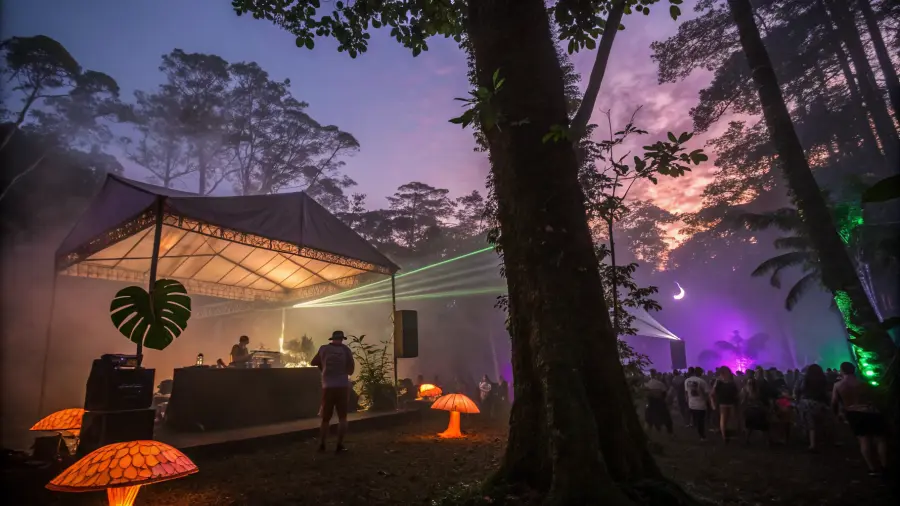 Drum and bass in Costa RicaThirty percent of our poll asks for drum and bass while the lineup is dubstep. How the two genres meet at the bass night near Jacó, Costa Rica.
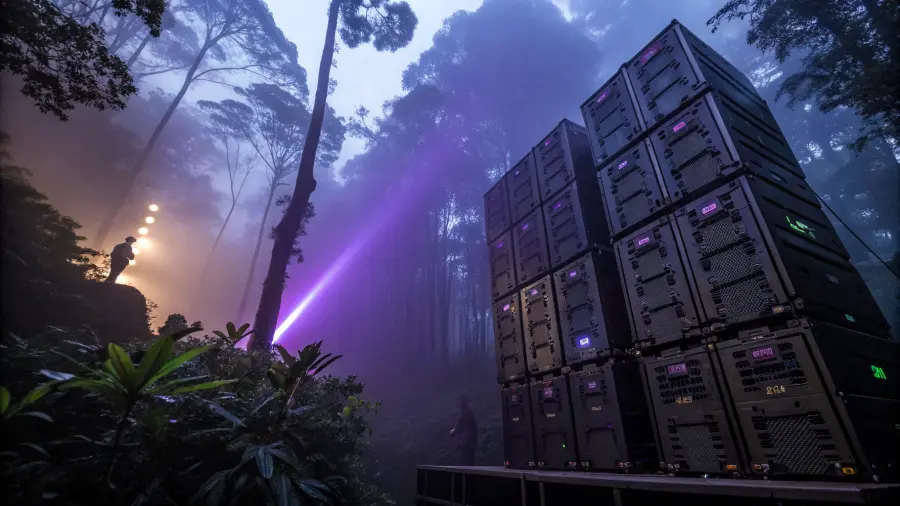 Neurofunk in Costa RicaNeurofunk in Costa Rica: the most technical branch of drum and bass, the reese, and why it splits floors. Told from the dubstep night near Jacó.
 Experimental bass in Costa RicaOne in six signups asks for music with no box. What experimental bass is, where it came from, and why it is on the dubstep bill near Jacó, Costa Rica.