Experimental bass in Costa Rica.
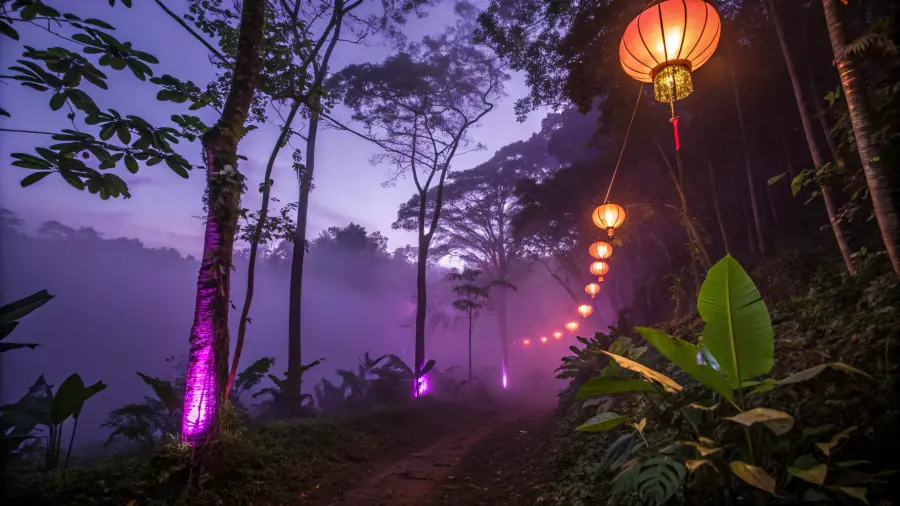
Seventeen percent of our poll asks for music it cannot name. They tick weird bass on the form and then write in artists none of us had in our libraries. It is the smallest of the three groups and the one that has moved our idea of how the night should sound the most.
Of the poll
One in six signups. Small next to dubstep, and still the hardest of the three to program.
How it moves
Tempo is decided per track, not per genre. There is stuff at 75 and stuff at 160 under the same label.
Where it came from
British post-dubstep on one side, the Los Angeles beat scene on the other. Two scenes that never agreed on a name.
What it is and what it is not
It is not a genre with rules. It is what is left when the rules go and the bass stays standing in the middle. Low end is still the main material, but tempo, meter and structure are all up for negotiation. A track can open at 75, reframe itself at 150 in the second minute and never repeat a section.
The label is recent; the practice is not. In the late 2000s, with dubstep already defined, some producers kept the sound design and threw out everything else. On the other side of the world, the beat scene that grew around the Low End Theory night in Los Angeles arrived somewhere similar coming from hip hop: loose drums, sampling, sub. Almost everything filed under this label today comes off those two branches.
What it is not: an excuse. A track with no structure still has to hold somebody standing in the mud at four in the morning. The difference between an experiment that works and one that does not shows up in ten seconds with people in front of you, and producers who do this know that better than anyone. The strangest sets we have heard were built tighter than most normal ones.
For the people making it
This is the half of the bill where we are shortest on people, and this is the only page where we say it that plainly.
The artist call has never filtered by genre. A mix works, so do single tracks, a live video or a portfolio. We do not ask for unreleased material or a mastered bounce, and sending something in locks no fee, no set time and no place on the bill; that gets talked through separately, and no name goes public here before it is signed.
See the artist callFor the people looking for it
Searching by genre name does not work well here, because half the artists reject the label.
What does work: follow labels instead of artists, and listen to hour-long recorded sets instead of single tracks. This sound makes sense by contrast, and one track on its own, with nothing before or after it, sounds like a playback error. Drop it into the middle of a set with dubstep on both sides and it suddenly has all the logic in the world.
Experimental bass in Costa Rica
The label barely gets used here. Nobody advertises a night of experimental bass in Costa Rica, because there is not enough of a crowd to fill a room with that alone, and whoever makes strange things posts them online before playing them in the country.
As far as we know, what exists is stretches inside other parties: fifteen minutes where a DJ lets go and tries something, usually early or very late, once the floor has lost its nerves. That is what we see from where we stand, and we are not going to claim more than we can back.
The 17% says something else though. It says people are already hunting this down on their own, with nobody programming it for them, and that if somebody puts it on open ground at the right hour there will be a crowd that stays. That is where the decision came from to put experimental bass on the bill next to dubstep instead of treating it as filler.
Questions from the smallest group
Are weird bass and experimental bass the same thing?
In practice, yes. Weird bass is what people call it in group chats and comments; experimental bass is what gets written down when it has to be written somewhere. We use both on the form and on this site and nobody has been confused yet.
How do you dance to something that changes tempo?
Badly, at first. Then you stop counting and move with the bass instead of the beat, which is exactly what the producer was after. Some tracks in this zone are not for dancing at all and get heard sitting down, and across a full bass program that has its place too.
Will this be played on the night?
Dubstep and experimental bass are the whole bill, so this has been in the frame since day one. How much of it and at what hour gets worked out by the DJs building their sets, and set times that do not exist yet are not ours to promise. No names either, until they are signed.
Is it any use if I have never heard bass music?
Oddly, yes, and sometimes more than it is for someone with twenty years of dubstep behind them. Whoever turns up with no expectations is not waiting for a drop on bar sixteen, so nothing disappoints them when it does not arrive. Bring earplugs anyway.
The 17% moves when you join
Signing up casts a genre vote and leaves three artist names, so that number shifts every time somebody new comes in. If the strange stuff is your thing, that vote is the fastest way to make it weigh on how the night gets ordered. It is free, it holds no ticket and no spam follows.
If you want context first, riddim is the opposite end of the same genre, trap explains the tempo it shares with dubstep, and bass house is the version with a steady kick. The groundwork is in what is dubstep.
Buy tickets What Is Dubstep? Origin, BPM and SoundDubstep is electronic music at about 140 BPM with half-time drums and sub-bass. Where it came from, how it differs from drum and bass, and what to listen for.
 Riddim in Costa RicaRiddim is dubstep stripped to the bone: triplets, one bass sound, no filler. What it is, how to spot it, and where it sits in Costa Rica near Jacó.
 Trap in Costa RicaThe word trap covers two different genres. Which is which, what they share with dubstep, and what that means near Jacó, Costa Rica.