WHY
ONLY BASS.
The moment somebody works out what this is, the second question is always the same: are you really not adding anything else? The short answer is no. The long one is this piece, awkward part included.
There is a comfortable way to build a night in Costa Rica and we know it well. Mixed bill, the small hours split into blocks, every block bringing its own people. The crowds stack, the place fills, and nobody leaves annoyed because everyone got their turn.
We do the opposite, and we do it knowing what it costs.
The price of saying no
Holding one genre means saying no to nearly everything else. No house to open soft while people arrive. No reggaetón when the energy drops. No techno at four in the morning to keep the floor from emptying, and no closing set built so that whoever did not come for the bass has something to talk about on Monday.
Every one of those refusals is people who do not show up, which translates into empty capacity and money that never comes through the gate. A single-genre bill speaks to a fraction of the fraction that already listens to electronic music in this country, and you have to find that fraction one person at a time, because it is not concentrated anywhere. It is scattered across the coast, the Central Valley, and an absurd number of group chats that never overlap.
It is also harder to explain. When you describe a multi-genre event, whoever is listening fills in the rest on their own, because they have been to something like it. When you say a full journey of dubstep and strange bass across two stages, half the room waits for the second half of the sentence. There is no second half.
We could soften it. All it would take is dropping the word bass from the headline and putting something wider there, something that commits to nothing. That tiny edit would bring us more people and remove the only reason this thing exists.
We would rather have five hundred people who came for this than a thousand who came for something else.
What the poll told us, and what it did not
When the signup form went live we put the genre question first, ahead of everything else. That was deliberate: we wanted the answer clean, before anyone shaped it around what they had already read on the site. Out of that come the three percentages you can watch move on the front page: dubstep 53, drum and bass 30, weird bass 17.
The 53 confirmed what we suspected. The 30 had us arguing for about three weeks.
Because 30 per cent is a lot of people asking for something that is not in the plan. The easy way out would be to drop in a drum and bass block, keep that third happy, and go on calling ourselves a bass event, which we technically still would be. We chose to read it differently: a poll tells you what people listen to, not what event you should build. Those are two separate questions and we only answered one.
Some things that form never measured, and they are worth saying out loud. We do not know how many of that 30 per cent would drive three hours for a full night of dubstep anyway. We do not know how many ticked drum and bass because it was the closest box to their thing, or how many would have ticked something else if the list had fifteen options instead of three. Three buttons are not a survey. They are a cheap thermometer, and that is how we used it.
One question stays open and we cannot answer it yet: if two editions from now that third is still there and still not showing up, we have no plan B written down.
The night is 31 December 2026 into the morning of 1 January. Tickets are on sale now. Choose your night and buy tickets for La Selva del Bajo at The Park at Ocean Ranch.
Weird bass, or what has no name yet
Of the three boxes, the one that matters most to us is the one with the fewest votes.
Weird bass, in our heads, works as a permission slip. It is where we put the person producing something at ninety-five beats with a bassline that matches no reference we know, or the one building an entire set from sounds recorded in their own kitchen. It is, quite literally, the tag we stick on whatever floored us and we could not classify.
Keeping that 17 per cent alive is expensive in attention. You listen to a great deal of material that will not work in order to reach the material that does. But if we let it go, three editions from now this becomes a predictable dubstep night, and there are people abroad already doing that better than us.
Two stages, one journey
The genre decision has a physical consequence, and it is the shape the land takes.
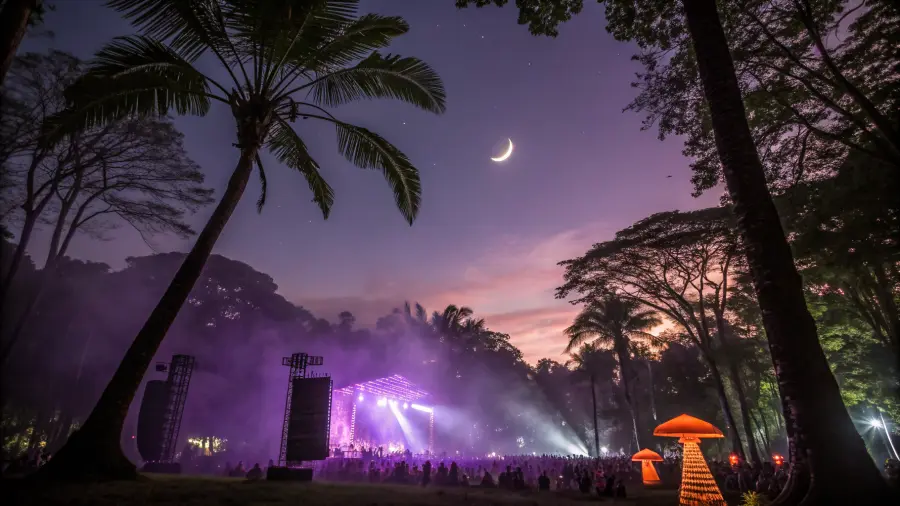
The two stages do not compete. They run one after another: Pool first, then the lasers on the Main Stage through the night. The crowd moves together instead of choosing between overlapping sets.
One sound connects all three places. By the time the Main Stage opens, the camping wraps around the overnight area and the longest distance between you and the music is the distance between you and your tent.
It is also the honest way to use two stages at our size: one focused production at a time, with no split crowd and no overlapping schedules.
If this sounds like you
We are new and there are not many of us. We will not sell the first edition as if ten years of history sat behind it. Whoever joins a project in its first year joins for another reason: they want the thing to exist.
Tickets are on sale now. Choose your night and buy tickets for La Selva del Bajo at The Park at Ocean Ranch.
And if your thing is producing, mixing, playing live or making visuals, the artist call is open. Especially if your material is the kind that fits nobody's box. That is exactly the box we are trying to fill.
The argument with numbers lives in dubstep in Costa Rica. What the full night looks like is in bass festival in Jacó. More writing from the crew, in the journal.
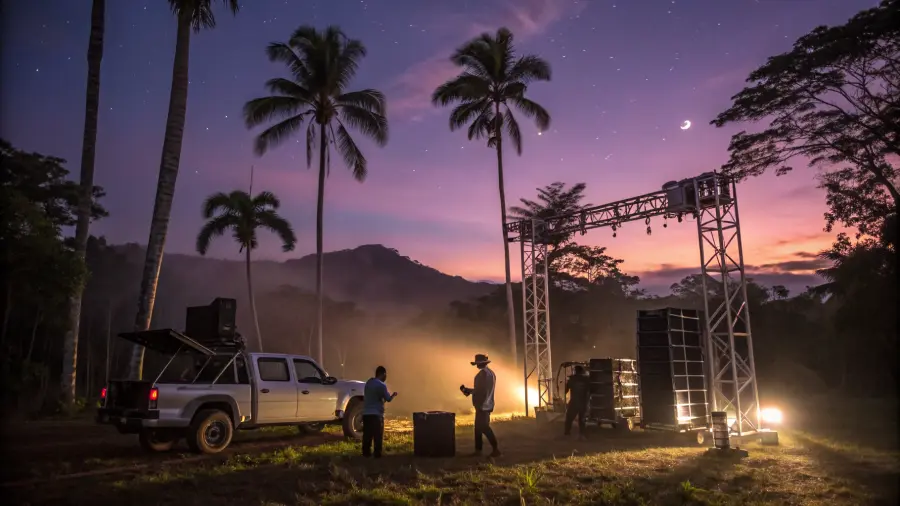 How a first edition gets builtHow the first edition of a bass and dubstep camping night near Jacó gets built from zero, and the real order the decisions actually happen in.
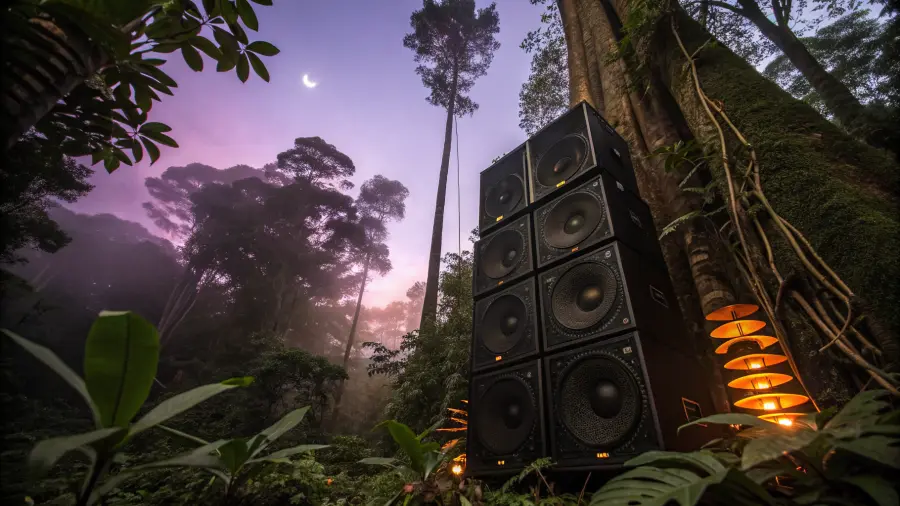 Dubstep in Costa RicaThe bass scene in Costa Rica exists; the festival did not. A 53% dubstep poll, a genre glossary, and the low-end night near Jacó, Costa Rica.
 Bass festival in Jacó, Costa RicaIs there a bass festival in Jacó? Yes: dubstep and experimental bass across two stages with camping at The Park at Ocean Ranch.